You are currently browsing the category archive for the ‘Poet’s Life’ category.
Admittedly, I’m not a “starving artist.” I’m well-paid and well-fed by my day job, so I don’t suffer in that way. Lately, though, I’ve been compelled to do some activities driven by an idea for a poem. My most recent painful experience has been climbing a tree. Yes, at 53, I climbed a tree. (Hey, that’s Seussical!)
When I was young, I climbed trees a lot. In my neighborhood growing up, the main kid-activities were tree-climbing, fort building, and bike riding. Now, however, it’s a real struggle to do any activity with the word “climb” in it. It took me many days to find a tree that was climable: low enough branches, thick, heavy limbs that could support my full-size butt, and limited brush and small branches around it (they whack you in the face). The only way I can describe this drive was, compulsion. I HAD to climb a tree; it had become a personal haj.
I did find one and I wrote extensively about the experience in a poem. The real tree was on Woodland Ave., banking a farm field, but I thought the street name was too overt, so I changed the location to County K. I really like the resulting poem and will submit it for critique to my group in a few weeks. I don’t have any idea what drove this episode, I’m just hoping my next one is less anxiety and boo-boo producing, not more.

Golden Retriever Postcard from Zazzle
IMHO, good lyrics are poetry. For example, I’m listening to Paul Simon this morning — his song, Father and Daughter has a wonderfully poetic image in it, “I’m going to stand guard, like a postcard of a golden retriever.” Also, the song always makes me cry; it came out the year my father died and, of course, I still miss him. A great song, like a great poem evokes a response.
My favorite lyricist is Joni Mitchell. Her lyrics can stand on their own as poems in almost every case. Who has ever written a better line than, “I could drink a case of you and still I’d be on my feet…”? While I’m not a drinker, I can appreciate the binge image. Additionally, Bruce Springsteen, John Mellencamp (underappreciated), and Warren Zevon also come to mind for complex, evocative lyrics.
In addition to the slightly warmer temperatures and the rain, robins are scavengening around my bird feeders. Spring is finally here in southern Wisconsin.
I pulled out a folder of stories from college today, stories written for a creative writing class. I read through them to see if anything was salvageable for updating — I haven’t written a short story since college. That’s been a while. Interesting (to me, at least) was the teacher I had for that class: T.C. Boyle. He had just published his first collection (didn’t require we read it, but a lot of us did), Descent of Man and his first novel was on the way. Now that he’s well established, I found his comments about my stories more interesting than my stories. My memory of him as a teacher is fairly vague — other teachers had a greater impact on me. Mostly I remember him as very, very tall, very, very thin, with a strange middle name (Coraghessan), but he told us we could call him “Tom.”
Nothing of my old stories has any potential, but they didn’t seem as immature as I thought they would be.
One of my esteemed collegues from Tuesdays with Story, my writing group said my latest poems were “fighting below my weight class.” God, I hate it when they’re right. I said on a previous blog that they always critique on target. When I submit poems that I’m not happy with; they’re not happy with them either. So, I’m going to line this feedback with silver lamé . (1). My assessment of a good poem is on-track with a reader’s assessment. My gut feeling is a good gauge. (2). The group will always tell me what they felt was missing or lacking in the poem. They tell me if it feels complete, and they tell me what reaction the poem caused. This can help me fix it. (3). This tells me I’m better at writing than these particular poems show. I’ve produced better that they’ve read, and they hold me to a higher standard. Thank you, my fellows. May the muses move in next door and bring ambrosia to your potluck dinners.
I received an email Monday, prior to the public press release, that announced the winners of the 2009 Wisconsin Academy annual poetry contest. (You can see the list of winners on the Wisconsin Academy website.) I’m not on the list.
This contest is the first one I’ve entered. Even though I didn’t win anything, it won’t be the last. In fact, I’ve sent submissions to two other contests since. It seems contests have an advantage to the writer over a direct submission. There’s no direct rejection letter, no form letter, no politely worded dismissal — just a list of winners made public. If you didn’t get a winners’ notice or your name’s not on the list, you didn’t make it. You just have to keep submitting. One will hit.
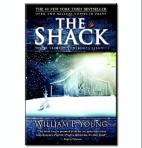
I first read a review of The Shack several months ago, praising its courage in subject matter. Unfortunately, I can’t agree — the book doesn’t live up to the effusive praise most have given it. It’s just too poorly written.
I am always interested in books that explore practical spirituality. When I went online to the library catalog, I found out that A LOT of others must be, too. I landed about number 300 on the waiting list (Yikes!). However, my number came up this week and, because it looked like a fast read, I started and finished it in less than a day, putting the biography of Walt Whitman and his brothers’ lives during the civil war, Now the Drum of War, that I had been reading on hold.
I imagine that those who have heaped praise on the book have done so mostly because there are not a lot of well-written books of this type available for them. I’m certain the publishing industry has noticed this lack in the genre by now. The Shack was originally self-published and ostensibly intended only as a gift for the author’s family. It was shopped to publishers and rejected by several (again, I believe it was rejected because of the writing quality – not the subject matter).
The author does make some interesting points, unfortunately, those salient points are glossed over too quickly: that god doesn’t speak directly to anyone anymore (as god did in ancient times), but relies exclusively on the “guilt-edged bible” to do his communication for him [sic], that god is a Euro-white male “papa” image that limits divinity; Jesus’ humanity, or own attachment to the simple dualities of good and bad. The parable’s basic plot line and theme have potential and surely resonates with people — how can a loving god allow such a terrible crime to happen to an innocent child? I just wish the author had been more skilled when he attempted to give us the answer.
Listening to my brilliant friends at the writing group last night, like most meetings, they spouted off some great lines and ideas. One example: That’s a dead-end creek. Whether he will remember saying it, I don’t know, but I will probably use it. Same with another phrase I heard in passing: patchwork soul. Has a bit of a country song sound to it, but that never stopped me. My point is that you can have the point-of-view that those are someone else’s ideas and you can’t touch them or you can have the idea that the universe will provide and allow it to provide for you in myriad ways. One of those ways can be out of the mouths of people who aren’t going to write that phrase down. Besides, how do you really know that your lines are completely original — no matter how long you struggle over them? I can’t remember everything I’ve ever read or heard, so it’s possible that some ideas come in at a lower level of consciousness. This input just may be what you call inspiration.
My writing this morning has been scattered. My morning walk normally centers me as I do walking meditation or other awareness tools. Instead there was a rock in my path (I noticed it, so I had to pick it up. Yes, I have a minor obsession with rocks.) It’s pyramid-shaped, pink granite with one side that’s very rough and the other two and the base worn smooth. Since I picked it up, all I’ve been able to think about are the men who’ve affected my life over the years. I squeeze the rock in my hand, and the edge cuts into my skin. Not quite enough to break the skin but enough to feel the sharpness and the pressure. Honestly, there have been many men, but most were barely a blip of a dalliance. Only three still prod and provoke me. or at least their memory does. Each relationship’s outcome seemed pre-destined, inevitable (do I believe in that, I wonder?). Or is it just the benefit of hindsight?
When I think of one, it’s been nearly thirty years since I’ve seen him. I have been working on a poem about our relationship for over a month now, and I just can’t articulate my feelings well enough to write coherently. Maybe that’s what I should write: how hard the idea of one person is to contain completely in one poem. Nah. That would be a cop-out. Am I showing my age with that slang? What’s the current way of saying that? I’ll have to research that.
I don’t have writer’s block, but I do get writer’s pinball — where my mind pings around without focus distracted easily by the flashing lights and bells. My thoughts stumble and careen like a sorority girl after a night out with sailors.
But at least I’m writing.
 Not me — I was born on the 13th. Like most fears, fear of the number 13 or Friday the 13th is a culturally induced belief. I don’t know anyone who’s actually afraid of 13 — I do know people who are afraid of werewolves (Carl), peanut butter (Lisa), angora (Barbara), and t-bar ski lifts (Janet). They make my own fear of big spiders and tarantulas seem reasonable. And, since this is my blog, there won’t be any representative pictures of arachnids in this post.
I’ve written about beliefs and wishing before, including monsters under the bed, in my poem “Did you Ever?” I’m going to explore deeper fears next. Unlike wishes, even writing about fears is sending out the invitation to them to show up in my life. Poetry is an extreme sport.
I haven’t taken any classes in writing poetry, so I’ve been experimenting on my own with different voices and styles, just to see what happens. While experimenting, I wrote this poem about Ophelia’s drowning in the voices of the servants who may have found her. I was also reading Charles Frazier’s Thirteen Moons at the time, so I intended to make the voice 19th century southern American.
Ophelia Found
We found Miss Ophelia
drowned in the river
sunup this morning
checking fish traps we was
drowned by her choices she was
Happens with no mother to see to a young’un.
Yes.
Stones clutched in her hands
stones lading her bodice
that fine thin gown a-hers
binding up her legs
pale like a baby bird they was
tried to fly too soon
Better she should’ve put a stone enwomb.
Yes.
Pulled her out from the water
laid her down soft on the bank
sent the boy to tell ma’am
whilst I made her clean as I could
carried her up to the house
Cleaned up as much as you could I’m sure.
Yes.
We piled her stones in a little cairn
aside the river
stones she chose herself
to mark the place
moved the traps upstream
Did you tell ma’am about the stones?
No.
©Copyright 2009 Pat Edwards
 Poetiosity